Introduction
The way people think about modern homes is changing. Today, buyers are increasingly looking for properties that combine luxury, functionality, technology, design and environmental responsibility. This shift has made sustainable construction an important part of modern real estate development.
From energy-efficient homes and smart technology to natural ventilation, landscaped spaces and eco-friendly materials, today’s architecture is moving toward more thoughtful and resource-conscious design.
The concept is particularly relevant to luxury farmhouse design, where large open spaces provide opportunities to integrate greenery, natural light and outdoor living into the overall property experience.
For developers such as Nehlia Developers, the future of real estate is not simply about creating attractive buildings. It is about creating thoughtfully planned spaces that support modern lifestyles while considering efficiency, comfort and long-term usability.
What Is Sustainable Construction?
Sustainable construction refers to planning and building properties in ways that aim to use resources efficiently while reducing unnecessary environmental impact.
It can involve decisions related to:
- Building materials
- Energy consumption
- Water management
- Natural lighting
- Ventilation
- Landscaping
- Waste management
- Construction practices
- Long-term maintenance
The objective is not necessarily to eliminate environmental impact completely, but to create buildings that use resources more responsibly throughout their lifecycle.
1. Why Sustainable Construction Matters
The construction industry consumes significant resources, making responsible planning increasingly important.
A thoughtfully designed property can potentially reduce resource consumption through better planning and efficient systems.
Some important areas include:
Energy Efficiency
Energy-efficient lighting, appliances, insulation and building design can help reduce unnecessary energy consumption.
Water Efficiency
Rainwater management, efficient plumbing fixtures and appropriate landscaping can help use water more responsibly.
Natural Light
Good orientation and window placement can increase access to daylight and potentially reduce dependence on artificial lighting during the day.
Natural Ventilation
Proper building design can improve airflow and indoor comfort.
These principles contribute to the broader idea of sustainable real estate.
2. Green Building Benefits
The green building benefits go beyond environmental considerations.
A well-designed green building can potentially provide:
- Better energy efficiency
- Improved indoor comfort
- Efficient water usage
- Better natural lighting
- Lower resource consumption
- Healthier living environments
- Potentially lower operating costs
However, actual savings depend on the building’s design, systems, usage patterns, maintenance and local conditions.
For property buyers, sustainability should therefore be evaluated as part of the property’s complete design rather than treated as a marketing label.
3. Green Building Materials
The selection of green building materials can play an important role in sustainable development.
Depending on the project, developers may consider materials that are:
- Durable
- Locally available where appropriate
- Resource-efficient
- Low-maintenance
- Recyclable or reusable where practical
- Suitable for the local climate
Material selection should always balance sustainability with structural performance, safety, durability and regulatory requirements.
The best sustainable design is one that performs well over the long term rather than simply using environmentally branded materials.
4. Smart Homes: The Future of Modern Living
Technology is becoming an important part of residential architecture.
Smart homes use connected technology to allow residents to monitor or control various aspects of their property.
Depending on the system, smart-home features can include:
- Smart lighting
- Automated curtains
- Smart security systems
- Video doorbells
- Climate controls
- Energy monitoring
- Smart locks
- Home automation systems
These technologies can improve convenience and, when used efficiently, may also help residents manage energy consumption.
For luxury property buyers, smart technology is increasingly becoming part of the overall lifestyle experience.
5. How Smart Homes Support Sustainable Living
Smart technology and sustainability can work together.
For example, automated lighting systems can turn lights off when they are not required. Smart thermostats can help manage cooling and heating more efficiently. Energy-monitoring systems can help residents understand where electricity is being consumed.
The combination of technology and efficient design can create more responsive homes.
However, smart technology itself does not automatically make a building sustainable. The underlying architecture, materials, energy systems and usage patterns remain important.
6. Luxury Architecture Trends
Modern luxury architecture is moving beyond large spaces and expensive finishes.
Today’s luxury design increasingly focuses on:
Minimalist Design
Clean lines, balanced proportions and uncluttered spaces.
Indoor-Outdoor Connection
Large openings, terraces, courtyards and landscaped areas that visually connect indoor and outdoor spaces.
Natural Materials
Wood, stone, textured surfaces and other materials that create a warm and timeless appearance.
Large Glass Openings
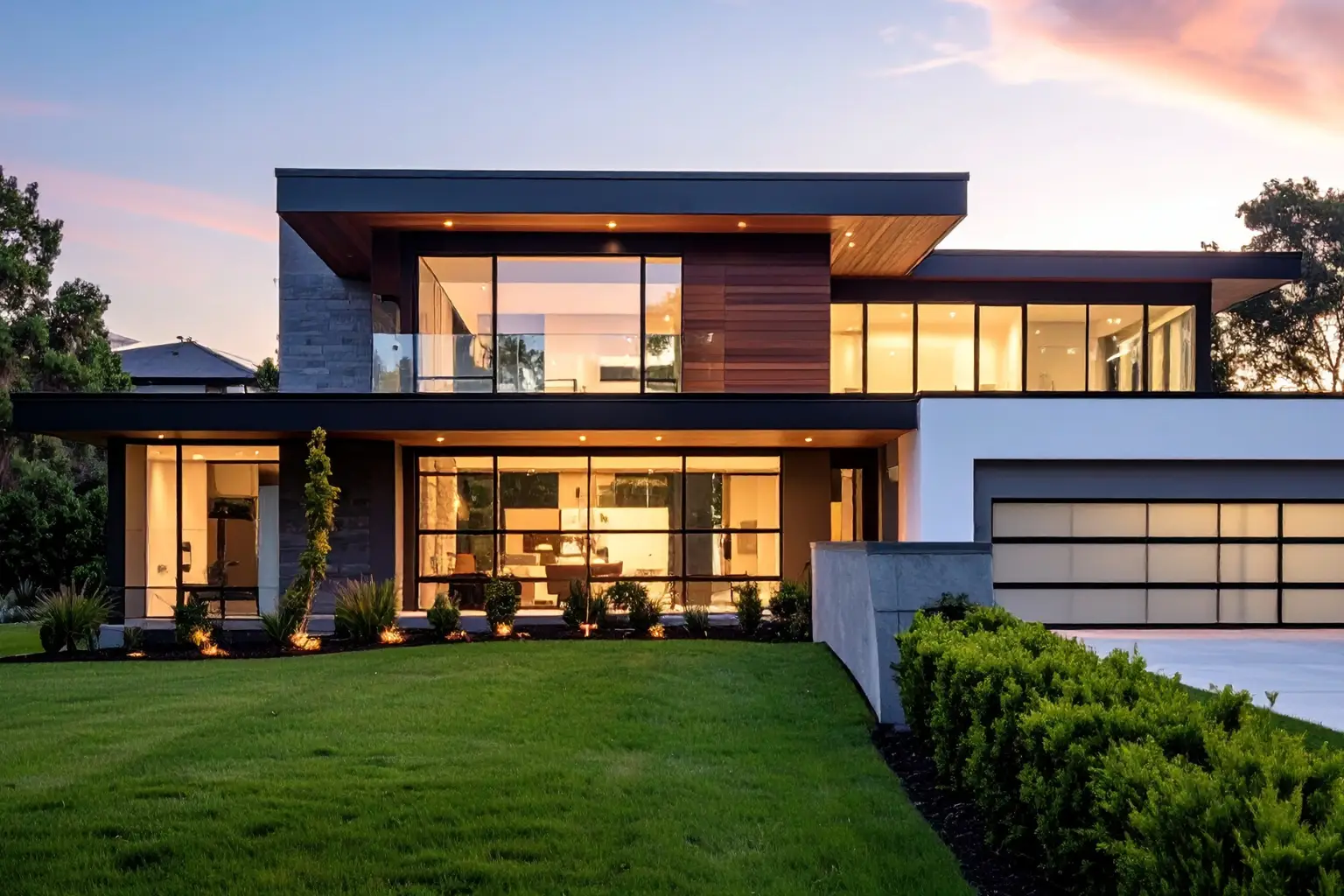
Windows and glass walls can bring natural light into living spaces while connecting interiors with surrounding landscapes.
Flexible Spaces
Rooms that can adapt to work, entertainment, relaxation or family activities.
These trends are particularly relevant to modern farmhouse design, where architecture often focuses on space, nature and indoor-outdoor living.
7. Modern Farmhouse Design Ideas
The modern farmhouse has evolved significantly from its traditional roots.
Today’s modern farmhouse design can combine traditional warmth with contemporary architecture.
Popular design approaches include:
Open-Plan Living
Large interconnected living, dining and kitchen spaces can create a more social environment.
Large Windows
Floor-to-ceiling or oversized windows can maximise natural light and views.
Outdoor Living Areas
Decks, patios, verandas and landscaped spaces can extend the usable living environment.
Natural Textures
Wood, stone and earthy finishes can create a connection with nature.
Contemporary Interiors
Modern furniture, lighting and minimalist details can give traditional farmhouse architecture a sophisticated appearance.
8. Green Architecture and Natural Landscaping
Green architecture is not limited to the building itself.
The surrounding landscape is equally important.
Thoughtful landscaping can incorporate:
- Native or climate-suitable plants
- Shade trees
- Green areas
- Permeable surfaces where appropriate
- Rainwater management
- Outdoor seating
- Walking paths
In a farmhouse development, landscaping can become a major part of the overall lifestyle experience.
Instead of treating outdoor areas as leftover spaces, modern planning can make them an integral part of the property.
9. Energy-Efficient Homes
Energy-efficient homes are designed to reduce unnecessary energy consumption while maintaining comfort.
Possible strategies include:
- Efficient lighting
- Energy-efficient appliances
- Building insulation
- Solar energy systems where suitable
- Natural ventilation
- Daylight optimisation
- Efficient cooling systems
- Smart energy monitoring
The exact energy performance depends on climate, construction quality, equipment and how residents use the property.
For homeowners, energy efficiency can contribute to long-term operational efficiency.
10. Sustainable Construction and Luxury Can Coexist
There is a common misconception that sustainability means compromising on luxury.
Modern architecture proves otherwise.
A luxury property can combine:
Premium Design + Technology + Comfort + Sustainability
For example, a luxury home can feature sophisticated interiors while also incorporating natural light, energy-efficient systems, landscaped surroundings and smart-home technology.
This is particularly relevant for premium buyers who increasingly expect their property to offer both visual appeal and practical functionality.
11. Sustainable Farmhouse Living
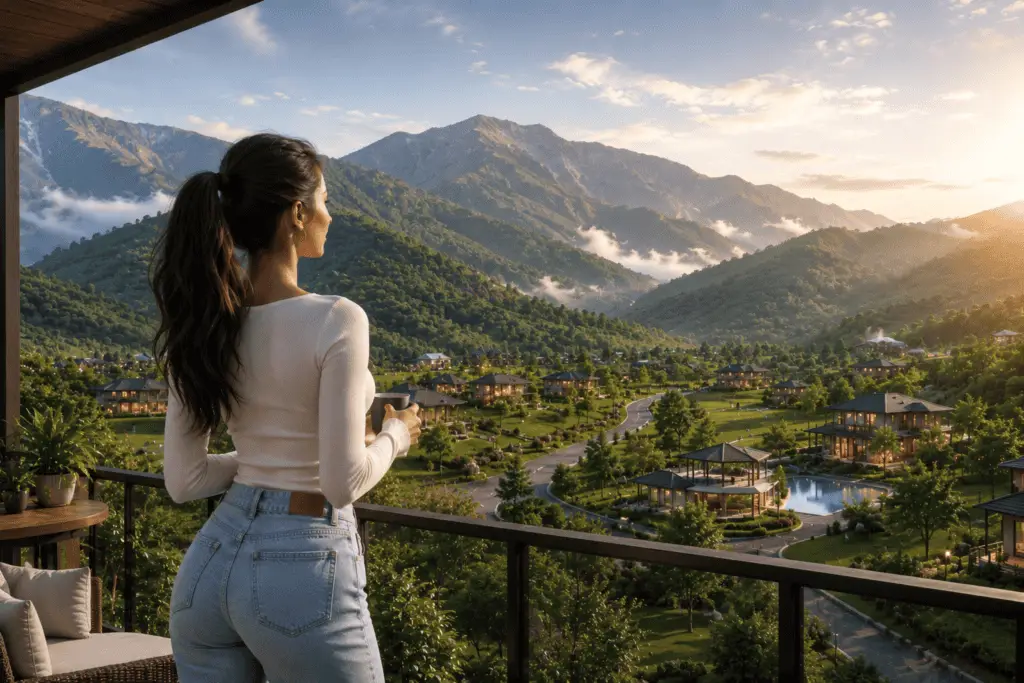
A luxury farmhouse design provides unique opportunities for sustainable living because the surrounding land can become part of the overall design.
Depending on the project’s planning and applicable regulations, sustainability may be considered through:
- Landscape planning
- Water management
- Solar energy
- Natural ventilation
- Outdoor spaces
- Energy-efficient lighting
- Native or climate-suitable planting
- Responsible material selection
A farmhouse can therefore become more than a weekend property. It can be designed as a lifestyle environment where architecture and nature work together.
12. Role of Real Estate Developers in Sustainable Development
Developers have an important role in shaping the future of sustainable real estate.
Sustainability should be considered from the planning stage rather than added as an afterthought.
A responsible development approach can consider:
- Site planning
- Infrastructure
- Energy efficiency
- Water management
- Landscape design
- Construction quality
- Material selection
- Long-term maintenance
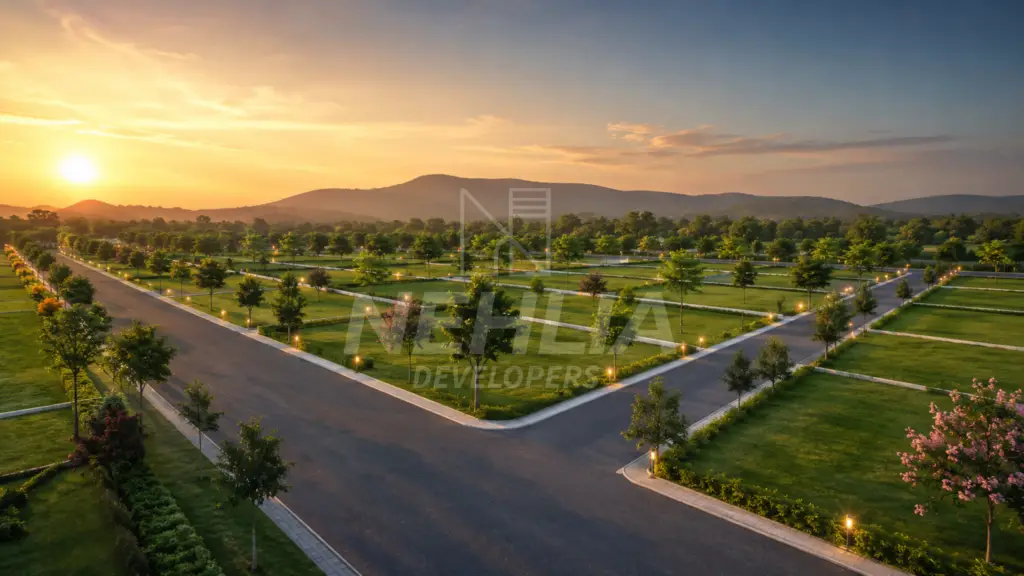
Nehlia Developers focuses on thoughtfully planned premium real estate developments where lifestyle, design, open spaces and modern requirements come together.
For buyers exploring a luxury farmhouse, premium plotted development or other lifestyle-oriented property, understanding the project’s planning and infrastructure is important before making a purchase decision.
13. Sustainable Construction in Delhi NCR
The demand for modern and efficient properties is becoming increasingly relevant across Delhi NCR real estate.
With urbanisation and changing buyer expectations, people are looking for homes that provide:
- Better space utilisation
- Modern amenities
- Green surroundings
- Technology
- Energy efficiency
- Comfortable living
For emerging locations around Gurgaon and the wider NCR region, sustainable planning can become an important part of future development.
However, buyers should evaluate specific projects based on their actual specifications rather than general sustainability claims.
14. What Should Buyers Look for in a Sustainable Property?
If sustainability is important to you, ask the developer specific questions.
Check Energy Systems
Ask about energy-efficient equipment, lighting and renewable energy provisions.
Check Water Management
Understand water supply, drainage and rainwater management systems.
Review Building Materials
Ask what materials and construction methods are being used.
Examine Landscaping
Check whether the project includes meaningful green and open spaces.
Understand Smart Features
Determine which smart-home systems are actually included.
Review Long-Term Maintenance
Sustainable features should be practical to maintain over the long term.
Conclusion
Sustainable construction is becoming an important part of the future of real estate. Modern buyers are increasingly looking for homes that combine design, technology, comfort, efficiency and responsible use of resources.
From green building benefits and energy-efficient homes to smart homes, natural landscaping and modern farmhouse design, the possibilities are expanding.
Luxury no longer needs to be defined only by size or expensive finishes. Today’s luxury architecture can also mean intelligent planning, natural light, comfortable spaces, advanced technology and a stronger connection with the surrounding environment.
For developers and buyers alike, the future lies in creating properties that are not only visually impressive but also practical, efficient and designed for long-term living.
Nehlia Developers aims to create thoughtfully planned real estate experiences that align with evolving expectations around premium design, open spaces and modern lifestyles.
Whether you are considering a luxury farmhouse, premium plot or residential property, always evaluate the actual construction specifications, approvals, infrastructure and long-term maintenance before making an investment.
FAQs
1. What is sustainable construction?
Sustainable construction focuses on designing and building properties with more efficient use of energy, water, materials and other resources while considering long-term performance.
2. What are the benefits of green buildings?
Green buildings can potentially improve energy and water efficiency, indoor comfort and resource management. Actual benefits depend on the building’s design and operation.
3. What are smart homes?
Smart homes use connected technologies to control or monitor features such as lighting, security, climate, appliances and energy consumption.
4. What are popular modern farmhouse design ideas?
Popular ideas include open-plan layouts, large windows, natural materials, landscaped outdoor areas, indoor-outdoor connectivity and minimalist contemporary interiors.
5. Can luxury homes also be sustainable?
Yes. Luxury and sustainability can coexist through energy-efficient systems, smart technology, natural lighting, quality materials, efficient landscaping and thoughtful architectural planning.
6. What is green architecture?
Green architecture focuses on designing buildings and spaces with consideration for energy efficiency, resource use, environmental impact, occupant comfort and long-term performance.
7. Why is sustainable construction important for real estate?
It can contribute to more efficient resource use and better long-term building performance while aligning with changing expectations of modern property buyers.
8. What should I check before buying a sustainable property?
Review the actual specifications for energy efficiency, water management, materials, landscaping, smart-home systems, approvals and maintenance requirements.